

Athleisure Market Driven by Health-Conscious Lifestyles, Expanding at 10.18% CAGR Through 2035
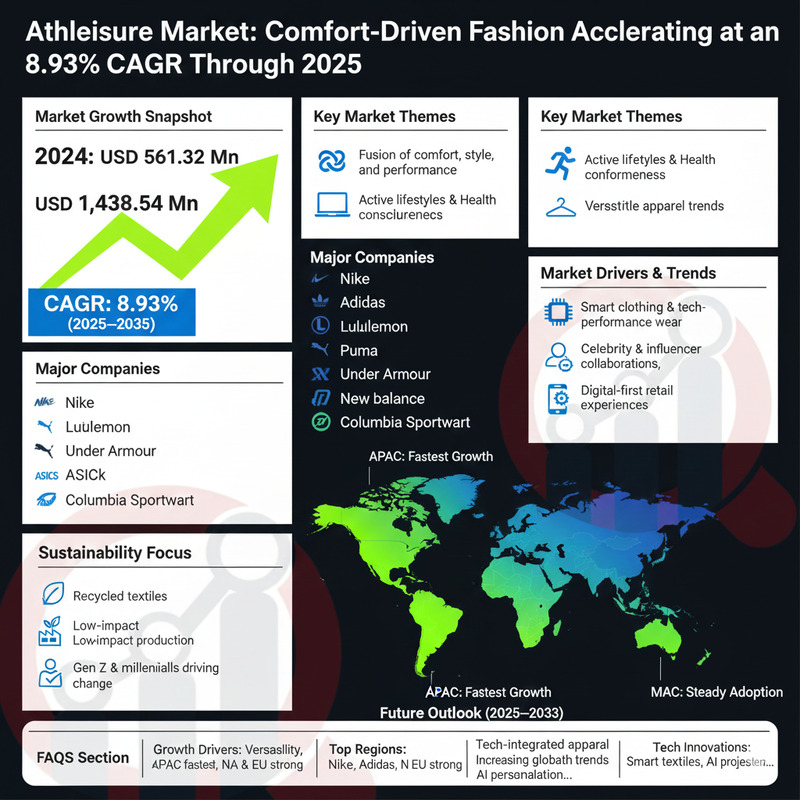
Athleisure Market
Athleisure Market is projected to grow from USD 393.47 billion in 2025 to USD 952.18 billion by 2035, driven by fitness trends and digital retail expansion.
NEW YORK, NY, UNITED STATES, June 18, 2026 /EINPresswire.com/ --The global Athleisure Market is witnessing remarkable growth as consumers increasingly prioritize comfort, wellness, and versatile fashion choices. Athleisure products, which blend athletic functionality with casual everyday wear, have evolved from a niche trend into a mainstream fashion category. The market encompasses clothing, footwear, and other accessories designed to support active lifestyles while maintaining aesthetic appeal. According to industry estimates, the market is valued at USD 393.47 billion in 2025 and is projected to reach USD 952.18 billion by 2035, registering a strong CAGR of 10.18% during the forecast period.
The growing emphasis on health and fitness is one of the primary factors fueling market expansion. Consumers across all age groups are participating in gym workouts, yoga, outdoor sports, and recreational activities, creating sustained demand for comfortable and performance-oriented apparel. Additionally, hybrid work cultures and flexible lifestyles have accelerated the adoption of athleisure products, as consumers seek clothing that seamlessly transitions between work, leisure, and exercise environments.
The competitive landscape of the Athleisure Market remains highly dynamic, with leading brands investing heavily in innovation, sustainability, and digital engagement strategies. Major companies profiled in the market include Nike, Adidas, Lululemon, Under Armour, Puma, New Balance, Vuori, Alo Yoga, FILA, and Li-Ning. These companies continuously introduce advanced fabrics, eco-friendly materials, and personalized product offerings to strengthen their market positions and attract diverse consumer segments.
Among product categories, clothing continues to dominate the market due to widespread demand for leggings, joggers, hoodies, sports bras, and performance tops. Consumers increasingly prefer apparel that combines style with functionality, enabling them to wear the same outfit for workouts, travel, shopping, and casual gatherings. Innovations in moisture-wicking fabrics, stretch materials, and temperature-regulating technologies further support the segment’s growth.
Free Sample Copy - Access A Complimentary Copy of Our Report to Explore Its Content and Insights
https://www.marketresearchfuture.com/sample_request/7412
The footwear segment also contributes significantly to market revenue. Athletic sneakers and lifestyle shoes have become essential fashion items among consumers worldwide. Technological advancements in cushioning systems, lightweight materials, and ergonomic designs have enhanced product performance while maintaining stylish aesthetics. As sneaker culture gains popularity globally, footwear manufacturers continue launching limited-edition collections and collaborations to drive consumer interest.
Beyond clothing and footwear, other product types such as caps, bags, socks, smart accessories, and performance gear are experiencing growing demand. These complementary products help consumers build complete athleisure wardrobes while providing additional convenience and functionality. The increasing influence of fitness influencers and social media platforms further boosts the visibility and adoption of these accessory categories.
From an end-user perspective, the market serves men, women, and children. Women's athleisure products currently account for a substantial share of global revenue, supported by rising participation in fitness activities and growing demand for fashionable activewear. Brands are expanding product lines with diverse designs, sizes, and performance features to cater to evolving consumer preferences.
The men's segment continues to demonstrate robust growth as awareness of fitness and wellness increases worldwide. Modern consumers seek apparel that delivers comfort, durability, and performance while maintaining a contemporary appearance. Consequently, manufacturers are introducing versatile collections designed for gym sessions, outdoor activities, and everyday wear.
The kids and children segment is expected to emerge as the fastest-growing end-user category, registering an impressive CAGR of 12.92% during the forecast period. Increasing participation in school sports, recreational activities, and outdoor play is driving demand for comfortable and durable athletic apparel. Parents are also prioritizing high-quality activewear that supports children's mobility and physical development.
Distribution channels play a crucial role in shaping market growth. Traditional offline retail stores continue to attract consumers seeking personalized shopping experiences and product trials. Sporting goods stores, specialty outlets, and branded retail locations remain important sales channels, particularly for premium athleisure products where fit and comfort significantly influence purchasing decisions.
However, online retail is expected to be the fastest-growing distribution channel, expanding at a CAGR of 12.38% through 2035. The rapid growth of e-commerce platforms, mobile shopping applications, and direct-to-consumer brand websites has transformed purchasing behavior. Online channels provide convenience, broader product selection, competitive pricing, and personalized recommendations, encouraging higher consumer engagement and sales conversion rates.
The increasing integration of digital technologies such as artificial intelligence, virtual fitting tools, and data-driven personalization is further enhancing the online shopping experience. Brands are leveraging these technologies to understand consumer preferences, optimize inventory management, and improve customer satisfaction, thereby strengthening their competitive advantages.
Regionally, North America remains a leading market due to high consumer awareness regarding health and fitness, strong purchasing power, and the presence of established athleisure brands. The region continues to benefit from widespread gym memberships, sports participation, and fashion-conscious consumers seeking premium activewear products.
Europe also represents a significant market, supported by growing wellness trends, sustainability initiatives, and increasing demand for eco-friendly athletic apparel. Consumers across the region are showing strong interest in products manufactured using recycled materials and environmentally responsible production processes.
Meanwhile, the Asia-Pacific region is expected to witness the fastest growth during the forecast period. Rising disposable incomes, urbanization, expanding middle-class populations, and increasing awareness of fitness activities are creating substantial growth opportunities. Countries such as China, India, Japan, and South Korea are emerging as important markets for both international and domestic athleisure brands.
Sustainability remains a critical market trend shaping future industry development. Consumers increasingly favor brands that demonstrate environmental responsibility through sustainable sourcing, ethical manufacturing, and transparent supply chains. As a result, leading companies are investing in recycled fabrics, circular fashion initiatives, and carbon reduction strategies to align with evolving consumer expectations.
Overall, the Athleisure Market is poised for substantial long-term expansion as lifestyle changes, fitness awareness, digital commerce growth, and product innovation continue to reshape consumer purchasing behavior. With strong demand across multiple product categories and demographic groups, the industry is expected to maintain its upward trajectory throughout the forecast period, creating significant opportunities for manufacturers, retailers, and investors worldwide.
FAQ
1. What is driving the growth of the Athleisure Market?
The market is primarily driven by rising health and fitness awareness, increasing participation in sports and recreational activities, growing preference for comfortable clothing, and the rapid expansion of online retail channels.
2. Which segment is expected to grow the fastest in the Athleisure Market?
The kids and children segment is projected to be the fastest-growing end-user category with a CAGR of 12.92%, while online retail is expected to be the fastest-growing distribution channel with a CAGR of 12.38% through 2035.
Read Our Related Research Report
Athletic Sock Market:
https://www.marketresearchfuture.com/reports/athletic-sock-market-25591
Connected Gym Equipment Market:
https://www.marketresearchfuture.com/reports/connected-gym-equipment-market-11641
Gym Accessories Market:
https://www.marketresearchfuture.com/reports/gym-accessories-market-26382
Gymnastic Equipment Market:
https://www.marketresearchfuture.com/reports/gymnastic-equipment-market-22953
Outdoor Gym Equipment Market:
https://www.marketresearchfuture.com/reports/outdoor-gym-equipment-market-28189
Sagar Kadam
Market Research Future
+1 628-258-0071
email us here
Visit us on social media:
LinkedIn
Facebook
X
Legal Disclaimer:
EIN Presswire provides this news content "as is" without warranty of any kind. We do not accept any responsibility or liability for the accuracy, content, images, videos, licenses, completeness, legality, or reliability of the information contained in this article. If you have any complaints or copyright issues related to this article, kindly contact the author above.
